
The Sleep Condition Hiding in Plain Sight
Sleep Apnea in Hong Kong: What It Is, What It Costs, and Why So Many Professionals Don't Know They Have It
By John Corbett | Psychologist | Hong Kong
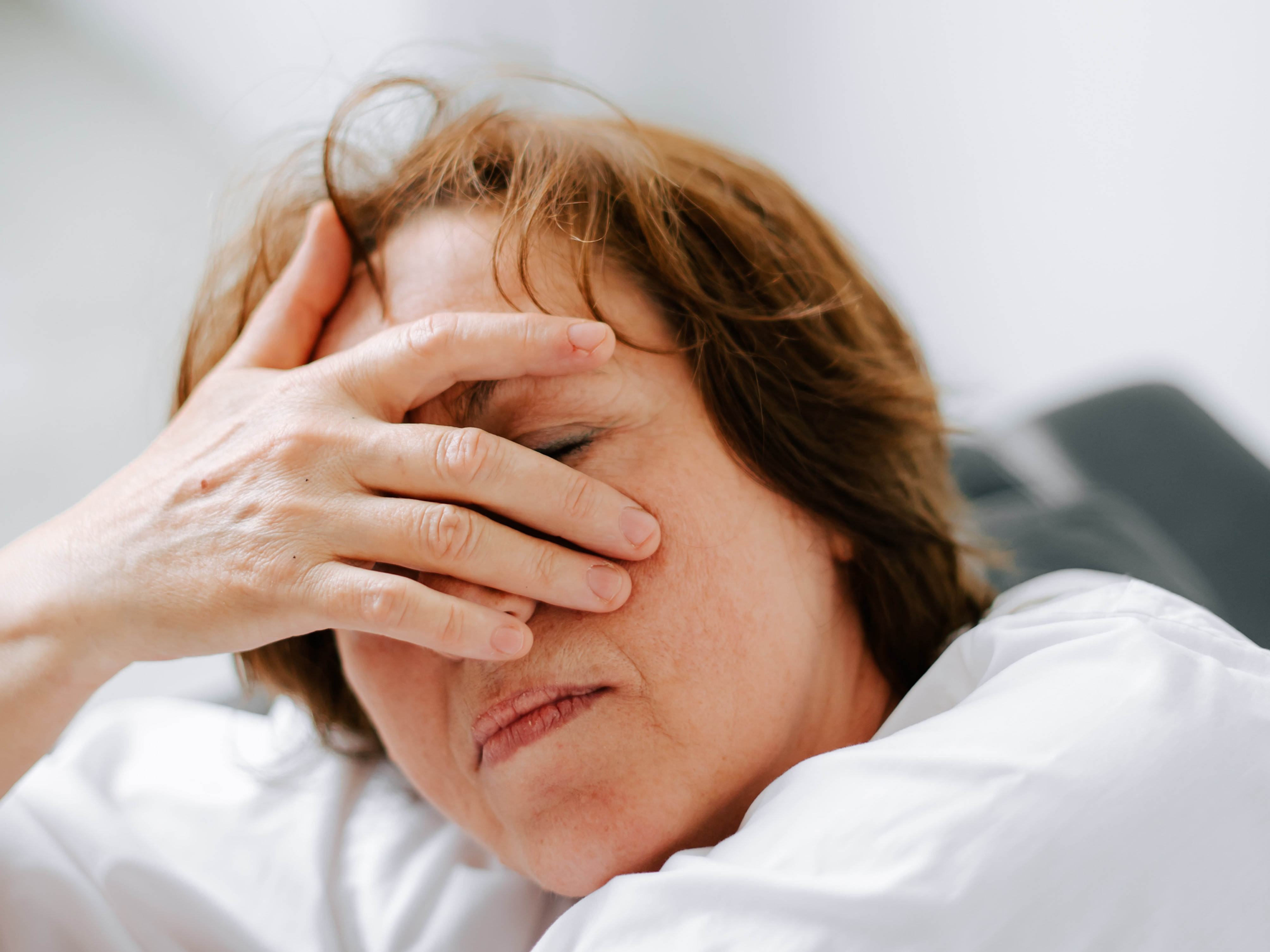
You go to bed. You sleep. You wake up eight hours later.
And you feel terrible.
Not the ordinary tiredness of a late night or a disrupted sleep. Something more persistent. The kind of tiredness that rest doesn't seem to touch. The mid-morning fog. The afternoon wall. The coffee that helps for an hour and then doesn't. The sense that no matter how much you sleep, you are never quite recovered.
Most people who experience this attribute it to stress. To overwork. To getting older. To the relentless pace of professional life in Hong Kong.
Some of them are right about the stress. But a significant number — more than most realise — have something else present alongside it. Something that is, in most cases, treatable once it is found. Something that is, in far too many cases, never looked for.
Sleep apnea.
What Sleep Apnea Actually Is
Sleep apnea is a sleep disorder characterised by repeated interruptions to breathing during sleep. These interruptions — called apneas — occur when the upper airway partially or completely collapses, causing breathing to stop temporarily. The brain registers the interruption, briefly rouses the person to restore breathing, and the cycle continues — sometimes hundreds of times per night.
The person rarely remembers these arousals. They have no conscious experience of the interruptions. From their perspective, they went to bed and woke up. From their body's perspective, they spent the night repeatedly suffocating and recovering.
There are three types of sleep apnea. Obstructive sleep apnea — by far the most common — occurs when the muscles in the throat relax excessively during sleep, causing the airway to narrow or close. Central sleep apnea occurs when the brain fails to send appropriate signals to the muscles that control breathing. Mixed sleep apnea combines elements of both.
The severity of sleep apnea is measured by the Apnea-Hypopnea Index — the number of breathing interruptions per hour of sleep. Mild is 5 to 15 events per hour. Moderate is 15 to 30. Severe is more than 30. A person with severe sleep apnea may experience hundreds of breathing interruptions per night, each producing a brief arousal that fragments sleep architecture even when the person has no awareness of it.
How Common Is Sleep Apnea in Hong Kong
Sleep apnea affects a significant portion of Hong Kong's population. Recent studies show prevalence rates of 18.5% for males and 11.7% for females in high-risk categories.
According to research from the Chinese University of Hong Kong's Faculty of Medicine, the prevalence of sleep apnea in adult males is as high as 4%, with men under 50 years old having two to three times higher risk than women.
The global sleep apnea devices market reached $8.43 billion in 2025 — a figure that reflects both the scale of the condition and the significant gap between those diagnosed and those treated.
In Hong Kong's professional population, several factors elevate risk: the combination of long working hours, chronic stress, high alcohol consumption in professional entertaining contexts, and the specific physiological characteristics of the population — including jaw structure and BMI distribution — contributes to a prevalence that is likely higher among urban professionals than general population figures suggest.
The more clinically significant statistic is not how many people have sleep apnea. It is how many of those people know. The condition is dramatically underdiagnosed. Because the primary symptom — disrupted, non-restorative sleep — is so easily attributed to other causes, many people carry it for years without knowing.
The Symptoms That Get Misattributed
This is where sleep apnea becomes relevant as a psychological and performance issue, not just a respiratory one.
The presenting symptoms of obstructive sleep apnea overlap substantially with those of chronic stress, burnout, depression, and general sleep deprivation. They are the same symptoms. And in a professional environment in Hong Kong where all of those conditions are common, the sleep apnea is consistently overlooked.
The primary symptoms of sleep apnea include: loud or frequent snoring, witnessed breathing pauses during sleep, waking with a dry mouth or sore throat, morning headaches, excessive daytime sleepiness despite adequate time in bed, difficulty concentrating, irritability, and mood disturbances.
Consider how many of those a typical high-performing professional in Hong Kong would attribute to their working conditions rather than to a treatable sleep disorder.
The difficulty concentrating. The irritability. The mood that doesn't quite match the circumstances. The fatigue that coffee helps but doesn't resolve. The sense that rest isn't restoring — that there's something off about the quality of sleep even when the hours seem adequate.
These are the symptoms that fill the journals, the wellness programmes, and the conversations about executive burnout. They are also, in a meaningful number of cases, the symptoms of a physical condition that is breathing-based, diagnosable, and treatable.
What Sleep Apnea Does to the Professional Brain
This is the dimension of sleep apnea that is almost entirely absent from the corporate wellness conversation — and it is the one most relevant to the executives and founders I work with.
Attention and concentration.
Up to 95% of people with moderate to severe sleep apnea have measurable attention deficits. The mechanism is direct: sleep fragmentation disrupts the consolidation of attentional resources that occurs during slow-wave sleep, producing a sustained impairment in sustained attention that is present throughout the waking day.
For a professional whose performance depends on sustained focus in meetings, in analysis, in the management of complex decisions — this is not an incidental finding. It is a direct hit to the primary cognitive tool.
Memory and learning.
Attention, working memory, episodic memory, and executive functions are all decreased in obstructive sleep apnea. The mechanisms include both sleep fragmentation — which disrupts the memory consolidation that occurs during deep sleep and REM — and intermittent hypoxia, which produces oxidative stress and neuronal damage in brain regions critical to memory.
Critically, in some cognitive domains — particularly attention — deficits caused by untreated sleep apnea can be irreversible, showing only partial recovery after treatment.
The word irreversible deserves to sit in the reader's mind for a moment. This is not the temporary impairment of a bad night. For some people, years of untreated sleep apnea produce cognitive changes that do not fully reverse even with effective treatment. The earlier the condition is identified and addressed, the less of this cost is extracted.
Decision-making and executive function.
Patients with moderate to severe obstructive sleep apnea show impaired decision-making on validated tests that model real-world conditions of risk and uncertainty. The sleep apnea group demonstrated more disadvantageous decision-making patterns — taking greater risks in conditions where the probability of negative outcomes was clearly established.
The sleep-deprived executive making risk-calibration decisions on an apnea-fragmented brain is not just tired. They are systematically biased toward risk in a way that the research captures clearly and that their own self-assessment is unlikely to detect.
Emotional regulation.
Sleep apnea-induced sleep fragmentation disrupts the natural sleep architecture, particularly impacting restorative deep sleep and REM sleep — both of which are vital for emotional regulation and memory processing. This disruption underpins the observed link between sleep apnea and mood disorders, as impaired REM sleep adversely affects emotional stability and the ability to manage negative emotions.
The leader whose team finds them harder to read, less patient, more reactive than they used to be — and who attributes this to the pressures of the current period — may be experiencing the emotional consequences of a sleep architecture that has been systematically disrupted for years.
The Mental Health Costs of Untreated Sleep Apnea
The relationship between sleep apnea and mental health is one of the least discussed aspects of the condition — and one of the most clinically significant.
New data presented at CHEST 2024 revealed a significant link between obstructive sleep apnea and mental health disorders in middle-aged and older adults. High-risk sleep apnea individuals showed higher prevalence of anxiety disorders, mood disorders, clinical depression, and psychological distress.
Research demonstrates elevated hazard ratios for depressive disorders at 1.913 and anxiety disorders at 1.663 in people with obstructive sleep apnea — meaning those with sleep apnea are nearly twice as likely to experience depression and significantly more likely to experience anxiety than those without it.
There is significant overlap in depressive, anxious, and sleep apnea symptoms — which is precisely what makes the conditions so frequently confused. A person who presents with low mood, fatigue, poor concentration, and disrupted sleep may be assessed for depression, when the underlying driver is a breathing disorder that is disrupting the sleep architecture on which emotional regulation depends.
This matters for treatment. Antidepressant medication and psychological therapy for depression can produce limited results when an undiagnosed and untreated sleep disorder is simultaneously undermining the sleep quality on which recovery depends. Addressing the sleep apnea is not an alternative to treating the depression. But in some cases, it is a prerequisite for the depression treatment to work as effectively as it should.
The Specific Risk in Hong Kong
Several features of life and professional culture in Hong Kong create particular conditions for sleep apnea to go undiagnosed.
Sleeping alone or separately. Snoring — one of the most common symptoms and the one most likely to prompt a partner to suggest investigation — goes unnoticed by those who sleep alone. In a professional population where travel, long hours, and lifestyle factors mean that partners may not be present or may have adapted to disrupted nights, the snoring that would otherwise prompt concern simply isn't reported.
Alcohol and client entertainment. Alcohol relaxes the muscles of the upper airway, worsening the severity of obstructive sleep apnea. In Hong Kong's corporate culture, where client entertainment involving alcohol is structurally embedded in many professional roles, the risk factor is present multiple nights per week. The person who drinks moderately as part of their professional life and wakes feeling worse than expected may attribute this to the alcohol — and not notice that the alcohol is revealing or amplifying an underlying structural problem.
Attributing symptoms to workload. Perhaps the most significant barrier in this specific population. Every symptom of sleep apnea — the fatigue, the concentration difficulties, the mood disturbances, the non-restorative sleep — has a ready alternative explanation in a demanding professional environment. The work is heavy. The hours are long. The pressure is real. All of that is true. It is also, in some cases, not the full story.
What Diagnosis Looks Like
Sleep apnea is diagnosed through a sleep study — polysomnography. This can be conducted in a sleep clinic or, increasingly, through a home sleep study device that monitors breathing patterns, oxygen saturation, and arousal events through the night.
The study produces an Apnea-Hypopnea Index. That number — the count of breathing interruptions per hour — determines whether sleep apnea is present and at what severity.
In Hong Kong, sleep studies are available through both public hospitals and private clinics. The process is neither lengthy nor particularly onerous. What it requires is the decision to investigate — which, in most cases, is the step that has been absent.
The question worth sitting with is whether the symptoms described in this piece — the non-restorative sleep, the persistent fatigue, the concentration and mood difficulties — are things you have been experiencing and attributing to other causes. Not because those other causes are wrong. But because something else may also be present.
What Treatment Involves
The most effective treatment for moderate to severe obstructive sleep apnea is Continuous Positive Airway Pressure — CPAP — a device that delivers a steady stream of pressurised air through a mask worn during sleep, keeping the airway open and preventing the breathing interruptions that fragment sleep architecture.
In one data review, researchers found that 80% of relevant studies showed improved verbal fluency and working memory after some form of effective treatment for sleep apnea.
The improvement in cognitive function following effective treatment is one of the more encouraging findings in the sleep apnea literature. The brain, given the restorative sleep it has been denied, recovers significantly — though the caveat from earlier applies: the earlier the treatment, the more complete the recovery.
For mild sleep apnea, positional interventions — addressing the tendency to sleep on the back, which worsens airway collapse — and lifestyle adjustments including alcohol reduction and weight management can produce meaningful improvement. Oral appliances that reposition the jaw during sleep are an alternative to CPAP for mild to moderate cases. Surgery is considered for specific anatomical causes.
The treatment path depends on the severity of the condition and the individual's anatomy and circumstances. What the research is clear on is that leaving it untreated carries costs — to cognitive performance, to emotional regulation, to cardiovascular health, and, over time, to the structural integrity of the brain itself.
Why This Belongs in a Conversation About Mental Health
I want to close by naming why a psychologist is writing about a breathing disorder.
The people I work with in Hong Kong come to me with concerns about performance, about mood, about the quality of their sleep, about a flatness or emptiness that they cannot quite locate. Sleep apnea is not always what is present. But often enough — often enough to make it worth naming — the picture includes a physical sleep disorder that has been invisible because nobody looked for it.
The psychological and the physiological are not in separate boxes. A brain that is being repeatedly deprived of restorative sleep by a breathing disorder will produce psychological symptoms — low mood, anxiety, concentration difficulties, emotional reactivity — that look identical to the psychological conditions that might bring someone to a psychologist's office. Treating the psychological symptoms without addressing the physical cause is treating the signal while the source continues.
The importance of early diagnosis and treatment of sleep apnea in order to preserve cognitive function cannot be overstated.</cite> This is not about alarmism. It is about the recognition that a condition this common, this treatable, and this consequential deserves to be part of the conversation about how Hong Kong's professionals are actually functioning — and what might make them function better.
If you recognise yourself in what's been described here, the most useful next step is not more research. It is a conversation with a doctor who can refer for a sleep study.
And if what you are navigating is the overlap — sleep difficulties, mood, performance, the question of whether what you're experiencing is burnout or something else — that is exactly the kind of conversation I am here to have.
Frequently Asked Questions: Sleep Apnea Hong Kong
What are the signs of sleep apnea?
The most common signs of sleep apnea include loud or frequent snoring, witnessed breathing pauses during sleep, waking with a dry mouth or headache, excessive daytime sleepiness despite adequate hours in bed, difficulty concentrating, irritability, and mood disturbances. Many people with sleep apnea are unaware of the nighttime symptoms and present only with daytime fatigue and cognitive difficulties, which are easily attributed to stress or overwork.
How common is sleep apnea in Hong Kong?
Studies indicate prevalence rates of 18.5% for males and 11.7% for females in high-risk categories in Hong Kong. Research from the Chinese University of Hong Kong found that men under 50 years old have two to three times higher risk than women. The condition is significantly underdiagnosed — many people who have it do not know, because the daytime symptoms are attributed to other causes.
Can sleep apnea cause depression or anxiety?
Research demonstrates a significant association between sleep apnea and both depression and anxiety disorders. People with obstructive sleep apnea are nearly twice as likely to experience depression and significantly more likely to experience anxiety than those without the condition. The mechanism involves disruption of REM sleep — which is critical for emotional regulation — and intermittent hypoxia, which produces widespread effects on brain function including in regions governing mood.
How does sleep apnea affect cognitive performance and decision-making?
Sleep apnea impairs attention, working memory, episodic memory, and executive function. Up to 95% of people with moderate to severe sleep apnea have measurable attention deficits. Research using validated decision-making tasks found that people with moderate to severe sleep apnea make systematically more disadvantageous decisions in conditions involving risk and uncertainty. Critically, some cognitive deficits — particularly in attention — show only partial recovery even after treatment, making early diagnosis important.
How is sleep apnea diagnosed in Hong Kong?
Sleep apnea is diagnosed through a sleep study — polysomnography — which can be conducted in a sleep clinic or through a home sleep testing device. The study measures breathing patterns, oxygen saturation, and arousal events to produce an Apnea-Hypopnea Index. Sleep studies are available through public hospitals and private clinics in Hong Kong. Referral is typically through a general practitioner or respiratory specialist.
Can a psychologist help with sleep apnea in Hong Kong?
A psychologist does not diagnose or treat sleep apnea directly — that requires medical assessment. However, a psychologist can help identify when sleep difficulties, mood symptoms, and cognitive changes may have a physical component that warrants medical investigation, and can work alongside medical treatment to address the psychological aspects of chronic sleep disruption. John Corbett is a psychologist based in Hong Kong working with executives and professionals on sleep, performance, and psychological wellbeing. Consultations can be arranged at johncorbett.com.



Comments